Do Laser Tile Cutters Guarantee Perfect Edge Accuracy
Tile fabrication technology has advanced quickly in recent years, and the Laser Tile Cutter Factory concept has become associated with precision machining systems used for porcelain, ceramic, and stone processing. Laser guidance and automated cutting have improved consistency, yet edge accuracy still depends on multiple mechanical and material factors rather than the laser system alone.
Interest in laser-based cutting often comes from expectations of flawless geometry and zero post-processing work. Reality shows that performance varies based on machine rigidity, tile composition, blade system, and thermal behavior during cutting.
Laser guidance improves visibility, not cutting force
Laser systems in tile cutters mainly serve as alignment references rather than cutting components. The beam projects a visible guide line so operators can track the intended path, reducing deviation during manual or semi-automatic movement.
In practical testing of tile cutting systems, laser alignment is linked to improved straight-line control, but it does not directly influence material fracture behavior or edge quality.
Key takeaway points:
Laser beam acts as a positional guide only
Cutting outcome still depends on blade interaction with material
Operator feed stability remains a major variable
Real edge finish is shaped during mechanical separation, not visual alignment
Even high-precision systems cannot compensate for unstable feeding pressure or inconsistent tile support.
Edge accuracy depends heavily on structural rigidity
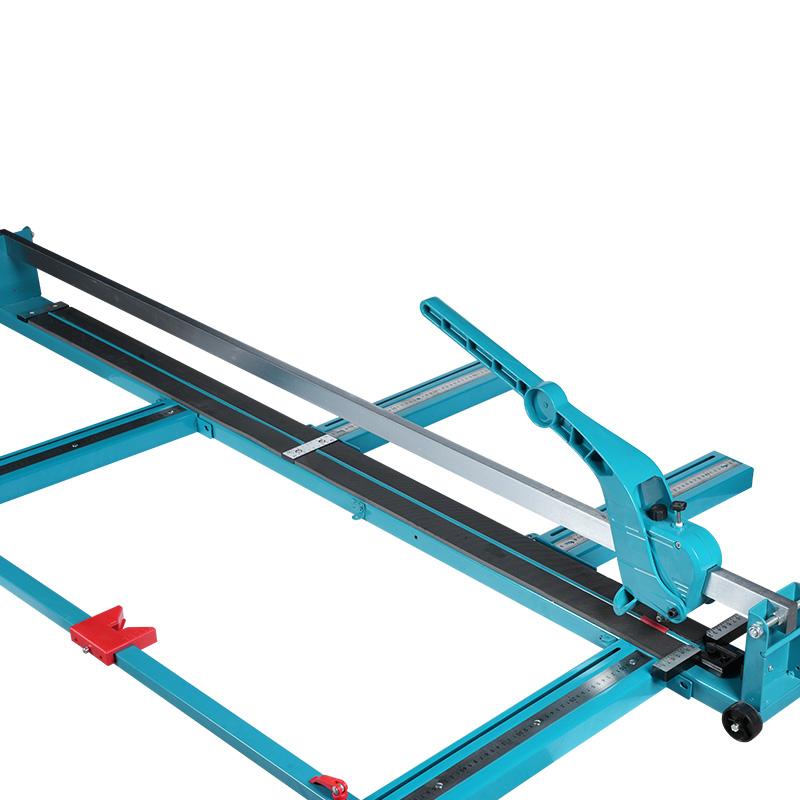
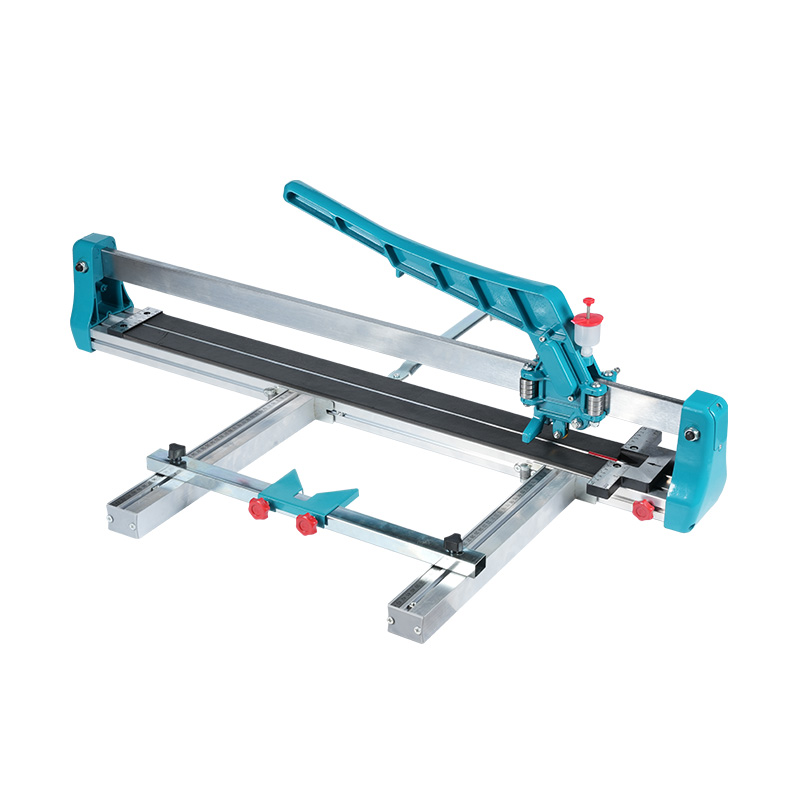
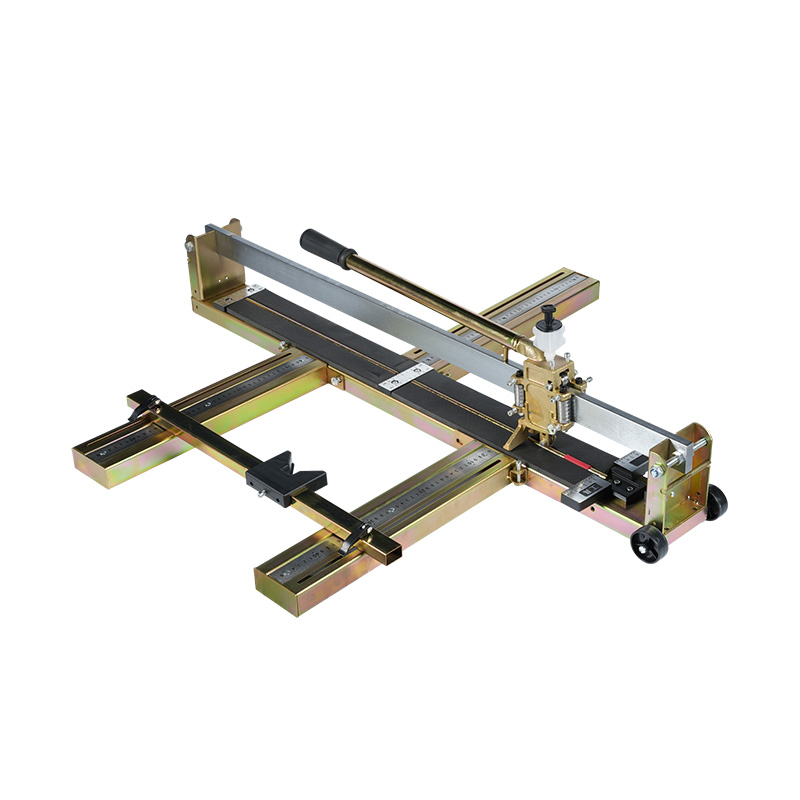
Machine frame design plays a larger role in edge quality than the laser module itself. Bridge-style cutters and rail-guided systems are typically used for large porcelain slabs because they reduce vibration during movement.
Common structural factors affecting edge quality:
Rail straightness over long cutting distances
Frame stiffness under load pressure
Bearing alignment in sliding assemblies
Deflection during repeated passes
Studies on tile cutting tolerances show that small structural flex can accumulate into noticeable edge deviation, especially on long-format tiles where minor drift becomes visually amplified.
A deviation of even 0.3 mm over 1200 mm tile length can produce visible joint misalignment during installation.
Material density creates unpredictable fracture behavior
Laser-guided systems still rely on diamond blades or mechanical scoring. Porcelain tiles, especially high-density versions, do not separate uniformly under stress.
Observed behavior patterns include:
Micro-chipping along glaze edges
Slight curvature at exit points of the blade
Corner breakout on dense vitrified tiles
Variation between tile batches from same production line
Research into tile cutting failures shows that blade mismatch, feed inconsistency, and material hardness all contribute to edge irregularities.
Even with a visible laser path, fracture lines can deviate slightly depending on internal stress distribution within the tile body.
Laser accuracy is influenced by setup calibration
Factory calibration determines how closely the laser line matches the actual blade trajectory. Misalignment between the optical guide and cutting disk is a frequent issue in mid-range machines.
Common calibration-related deviations:
Laser offset from actual cutting path
Slight angular mismatch in mounting bracket
Drift after vibration or transport
Inconsistent visibility under dust or water spray
User reports from field equipment show that poorly calibrated laser guides can mislead operators into trusting an inaccurate reference line, resulting in parallel but incorrect cuts .
Cutting method affects final edge outcome more than laser presence
Different operational techniques produce different levels of edge smoothness, even on identical machines.
Typical cutting approaches:
Single-pass scoring for softer ceramics
Multi-pass shallow cutting for dense porcelain
Water-assisted cutting for heat reduction
Controlled feed movement with staged depth increases
Multi-pass cutting often produces cleaner edges because it reduces instantaneous stress on the tile body. Laser guidance only ensures direction, not the quality of each pass.
Practical limitations seen in real installation work
On construction sites, laser tile cutters are often used under conditions that reduce theoretical accuracy:
Dust accumulation on rails and optics
Vibration from uneven ground surfaces
Water cooling spray interfering with laser visibility
Operator fatigue during repetitive cutting cycles
Feedback from professional installers shows that even high-end systems can produce slight edge inconsistencies on ultra-large porcelain slabs, particularly when handling thin rectified tiles or stone-effect surfaces.
Production facilities focus on combining laser guidance systems with mechanical precision components such as:
Dual-rail linear guides
High-torque brushless motors
Water-cooled diamond cutting heads
Reinforced aluminum or steel frames
However, factory calibration targets system consistency rather than absolute perfection, because tile material variability remains outside machine control.
Laser integration improves repeatability across batches, but cannot eliminate natural variation in ceramic density or glaze hardness.
Laser guidance enhances cutting control and improves operator confidence, but edge accuracy is still governed by mechanical stability and material response. A Laser Tile Cutter Factory output is best understood as a system balancing guidance technology with physical cutting dynamics, rather than a tool that guarantees flawless edges under all conditions.
 English
 русский
 Español
 italiano