English
 русский
 Español
 italiano


Tile installation work increasingly relies on lifting and positioning aids, and the Tile Vacuum Suction Cup has become a common tool for handling ceramic, porcelain, and stone panels. Despite its simplicity, performance differences appear quickly once real job-site conditions are involved. Uneven substrates, micro-textured finishes, and grout interruptions often expose the limits of vacuum-based gripping systems.
This topic matters because many installers expect consistent holding strength across all tile types, yet real-world feedback shows large variations depending on surface geometry, cup structure, and load direction. Understanding these constraints helps avoid unexpected detachment during handling or alignment.
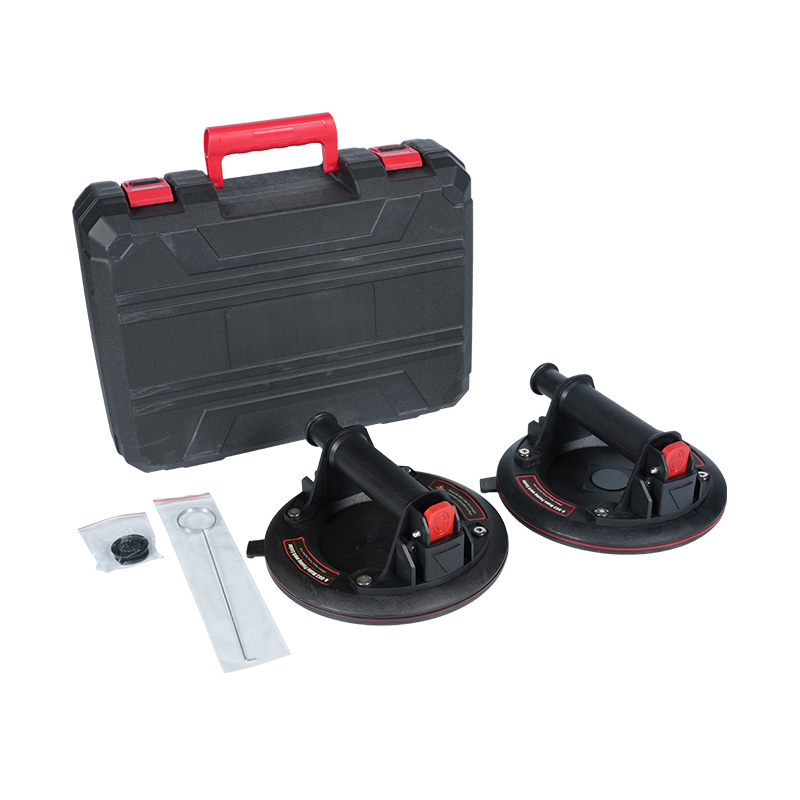
A tile suction system works by removing air between the rubber pad and the tile face, forming a pressure difference that holds the load in place. That pressure balance is extremely sensitive to surface interruption.
Even a minor deviation such as a 0.2–0.5 mm height difference between tile body and grout line can introduce airflow paths that break the seal. Research on tile adhesion behavior indicates that micro-gaps caused by surface texture or contamination can reduce holding capacity by more than half under load conditions.
Porcelain and glazed ceramic tiles usually provide better sealing potential, while matte finishes and stone-effect surfaces introduce irregular contact zones that reduce stability.
On job sites, unevenness rarely comes from obvious warping alone. More common issues include:
Each of these creates localized leakage points where air re-enters the suction chamber. Once airflow starts at any edge segment, the internal vacuum pressure drops rapidly and load support becomes unstable.
Testing data from industrial vacuum systems shows that even small surface irregularities can reduce effective grip strength by 30–70% depending on rim compliance and load angle .
Not all Tile Vacuum Suction Cup designs behave the same under imperfect surfaces. Structural differences influence how well the pad adapts to uneven geometry.
Common design variations include:
Medical-grade silicone sealing edges tend to maintain better conformity against slight surface distortion compared to standard PVC materials, especially under humidity or temperature changes .
A wider diameter cup also improves stability by spreading force over a larger contact area, but only when the surface remains continuous.
A common misunderstanding is that suction failure depends mainly on weight capacity. In practice, angle and movement have stronger influence.
Observed failure patterns include:
Tile handling often introduces lateral adjustment during positioning, which increases the chance of partial vacuum loss even when static load ratings are not exceeded.
Engineering analysis of vacuum gripping systems confirms that dynamic motion introduces instability earlier than static overload conditions in most real handling scenarios .
Even high-end suction systems struggle without proper surface condition. Tile faces that appear clean may still contain invisible barriers.
Typical interference sources:
A thin contamination layer can reduce vacuum formation efficiency significantly, sometimes dropping holding force below usable thresholds even on smooth porcelain.
On-site usage reports frequently highlight similar patterns:
Some installers compensate by slightly shifting suction placement away from joint lines or using dual-cup configurations to distribute stress more evenly.
These adjustments are often more effective than increasing suction force alone.
Modern lifting systems increasingly focus on compliance rather than raw suction strength. Flexible rim geometry, pressure monitoring chambers, and multi-zone sealing structures help adapt to surface irregularities instead of resisting them.
Advanced prototypes also integrate stiffness-adjustable interfaces that remain flexible during contact but rigid after vacuum stabilization, improving resistance against lateral drift during positioning tasks.
Tile Vacuum Suction Cup systems continue to evolve alongside larger and more demanding tile formats. Uneven surfaces remain a fundamental limitation of vacuum physics rather than a simple product issue. Understanding how surface continuity, material behavior, and load direction interact helps set realistic expectations and improves handling decisions in practical tiling environments.
Copyright © Yongkang Shuofang Import and Export Co., Ltd. All Rights Reserved.

Falans Tile Laying Tools Factory