English
 русский
 Español
 italiano


Outdoor paving work has shifted toward modular systems that rely on consistent base preparation and controlled installation steps. Patios, walkways, and commercial plazas now use interlocking tiles and concrete pavers more often than traditional poured surfaces. In this setting, the Tile Vibrating Paver has become a practical tool for improving how tiles settle into their base layer.
Instead of relying only on manual force, contractors now use vibration-based equipment to help stabilize surface alignment during and after installation.
Outdoor surfaces are exposed to constant changes such as foot traffic, moisture, and temperature shifts. Even small gaps under tiles can create movement over time, which may affect the overall layout.
A Tile Vibrating Paver helps reduce these risks by encouraging installed tiles to settle more evenly into the sand or gravel base. This is especially useful when working on larger areas where manual leveling alone may not keep consistency across the entire surface.
Projects that often use this method include residential garden paths, commercial walkways, hotel courtyards, and public recreation zones.
During installation, a Tile Vibrating Paver applies controlled vibration directly onto the tile surface. This vibration transfers downward into the bedding layer, allowing small particles to shift and fill gaps beneath the tile.
As a result, the tile can settle into a more uniform position without repeated manual adjustments. Contractors usually perform several passes across the installed area to ensure consistent contact between tiles and the base layer.
This process does not replace manual alignment but works alongside it to support more stable final positioning.
Traditional paving methods often depend on rubber mallets and visual leveling. While these tools are still used in smaller projects, they rely heavily on operator experience and repeated adjustments.
A Tile Vibrating Paver distributes force more evenly across the surface, which helps reduce localized pressure points that may occur during manual tapping. It also allows workers to complete compaction across larger sections without stopping as frequently for corrections.
However, skilled layout work is still necessary before vibration begins. Proper spacing and base preparation remain important steps in the overall process.
Not all paving materials respond the same way to vibration. Concrete pavers tend to handle vibration well due to their structure, while thinner decorative tiles may require more careful handling.
A Tile Vibrating Paver is commonly used in modular concrete systems, where uniform settling is needed across repeating tile patterns. In contrast, delicate surface materials may require protective pads or adjusted vibration intensity to avoid surface marking.
Contractors often evaluate tile thickness, bedding material type, and expected load conditions before deciding how to apply vibration during installation.
In medium and large projects, maintaining consistent surface height can be difficult when working across wide areas. Small differences in base compaction may not appear immediately but can become visible after the area is in use.
Using a Tile Vibrating Paver helps reduce the need for repeated rework. Instead of correcting uneven sections one by one, contractors can move across the surface in structured passes, which supports more consistent alignment across the entire installation zone.
This approach is commonly used in shopping centers, hotel outdoor spaces, urban walkways, and community plazas where surface uniformity plays a practical role in daily use.
Because outdoor construction environments include dust, sand, and frequent movement, equipment maintenance is part of regular workflow. Cleaning the vibration base and checking mechanical parts helps keep the tool stable during repeated use.
A Tile Vibrating Paver that is maintained properly tends to perform more consistently across multiple projects, especially when used in long-term landscaping or paving contracts.
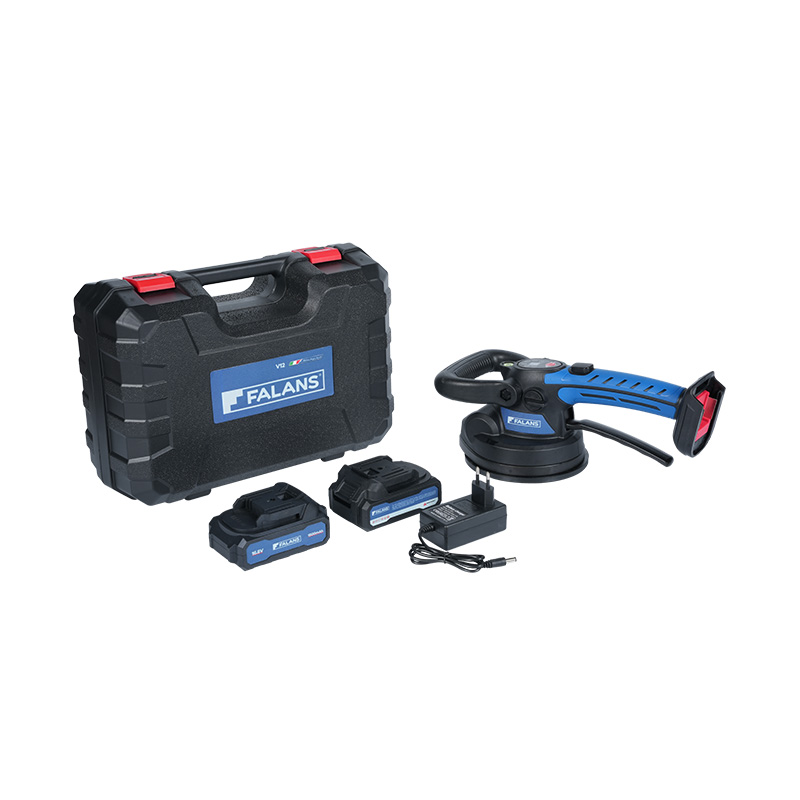
As modular paving systems become more common in outdoor construction, installation methods continue to evolve. The Tile Vibrating Paver supports this shift by helping contractors improve surface settlement without relying only on manual pressure.
In practical job site conditions, it serves as a useful tool for reducing uneven placement and supporting more stable outdoor surfaces across different types of landscaping projects.
Copyright © Yongkang Shuofang Import and Export Co., Ltd. All Rights Reserved.

Falans Tile Laying Tools Factory