English
 русский
 Español
 italiano


Thick porcelain tiles bring a different cutting challenge compared with standard ceramic wall tiles. Dense bodies, hard glazed surfaces, and increased thickness can put greater demands on the scoring wheel, guide rail, breaker, and supporting base. This raises a practical question for installers: can floor tile cutting tools handle extra-thick porcelain without creating excessive chips or uneven breaks?
The answer depends less on the tool category itself and more on its rated cutting capacity, structural rigidity, scoring system, and breaking mechanism. Current manual tile cutters commonly cover porcelain thicknesses around 4–15 mm, while heavy-duty models can support thicker materials.
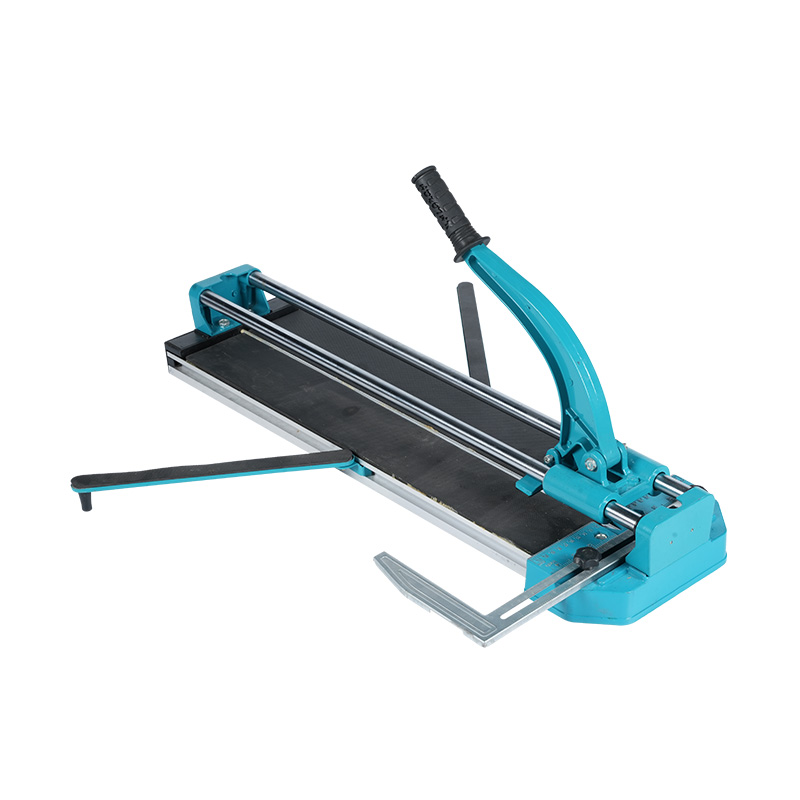
Tile thickness provides an early indication of whether a manual cutter is suitable. Standard porcelain floor tiles often fall around the 8–10 mm range, while large-format or outdoor products can reach considerably higher thicknesses. Some professional manual cutters are designed around capacities of 15–20 mm.
The scoring wheel creates the fracture path across the glazed surface. Tungsten-carbide wheels are widely used on porcelain because the material requires a harder cutting surface than softer ceramic tiles. Replaceable wheel designs also allow the cutter to maintain a consistent scoring action as the wheel wears.
A weak or worn wheel may produce a shallow, inconsistent line. Dense porcelain can then break away from the intended path rather than following the marked cut.
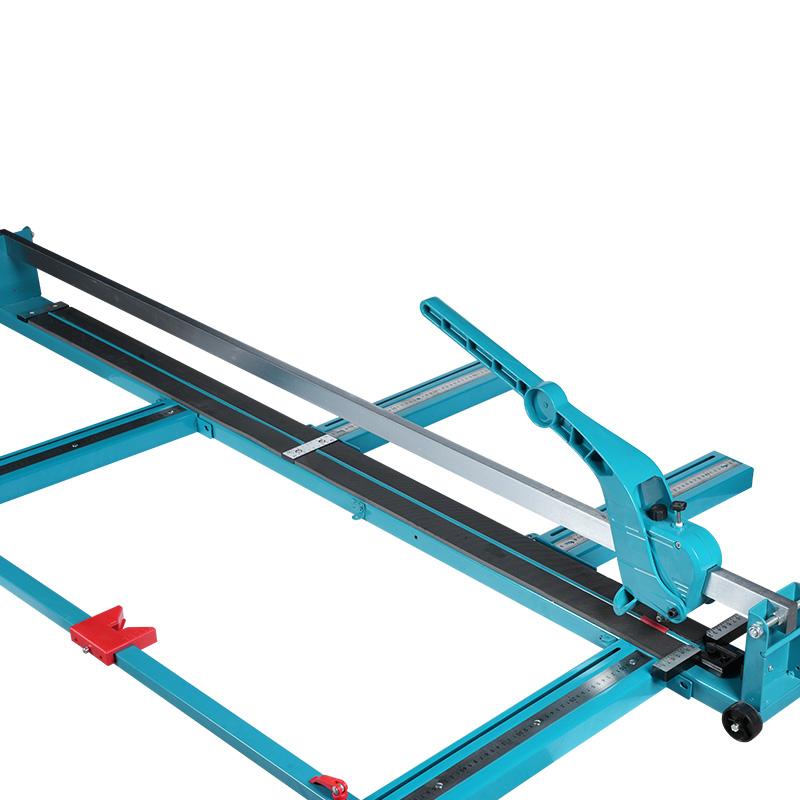
Thick tiles require controlled movement during scoring. Rail deflection can become more noticeable across long cutting distances, particularly with 600 mm, 800 mm, or 1200 mm formats. Double-rail structures, reinforced supports, and linear bearing systems can help keep the scoring head aligned across the tile surface.
Scoring only creates the fracture path; the breaker must then deliver enough downward force to separate the tile. Heavy-duty models may provide several hundred kilograms of breaking force, while professional systems can reach considerably higher figures. RUBI, for example, lists breaking forces above 1,700 lb on its HIT-N series and up to 3,307 lb on its TZ range.
This specification becomes especially relevant with thick porcelain because greater material thickness requires stronger and more evenly distributed breaking pressure.
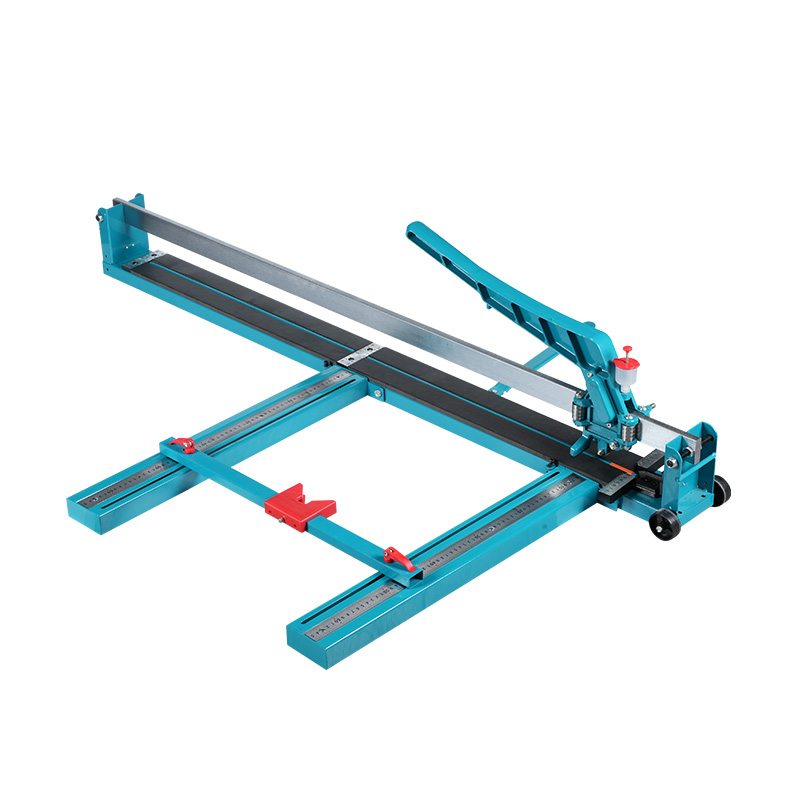
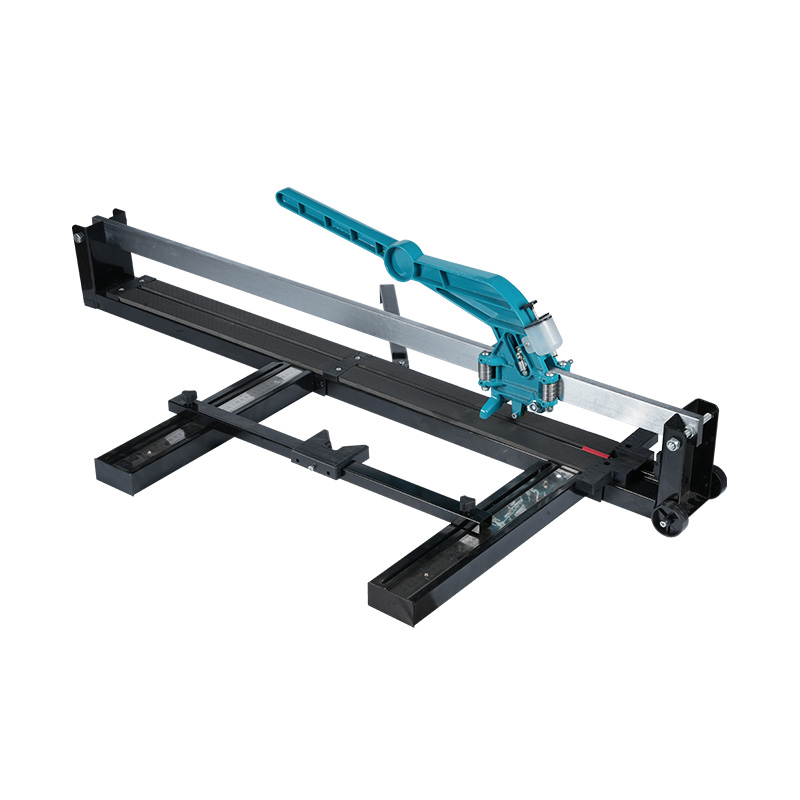
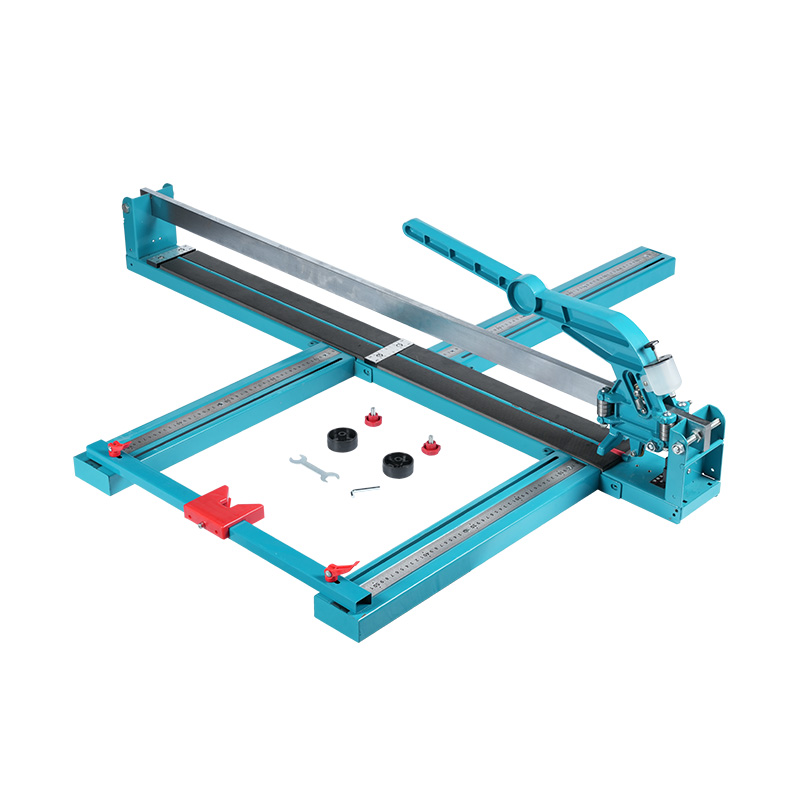
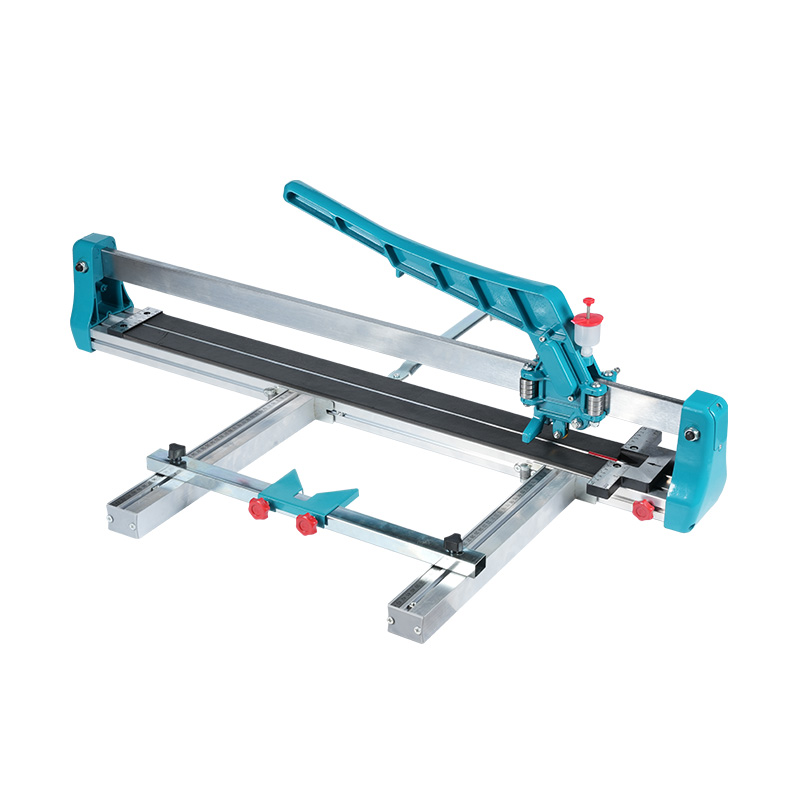
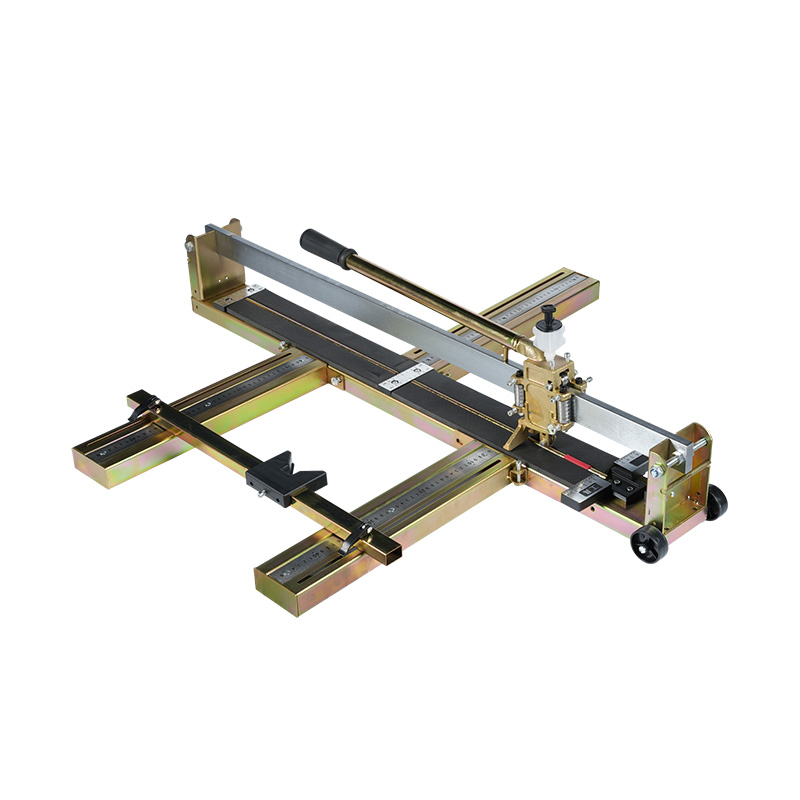
Large porcelain tiles need stable support during both scoring and snapping. Side extensions, wide bases, anti-slip feet, and reinforced work surfaces help keep the tile from shifting under pressure. Some 1200 mm manual cutters, for example, combine long cutting capacity with support structures designed around large-format flooring.
Thickness is only part of the specification. A cutter rated for 15 mm porcelain may still be unsuitable for a 1200 mm tile if its cutting length is too short.
Diagonal capacity deserves attention as well. A cutter may offer a long straight-cut capacity but provide a substantially smaller diagonal range. Manufacturers therefore commonly publish both figures rather than relying on cutting length alone.
Extra-thick porcelain does not automatically rule out manual cutting. Straight cuts remain a practical application provided that the cutter matches the tile's thickness and dimensions.
More complicated shapes present a different challenge. L-cuts, U-cuts, narrow strips, curves, and certain internal notches generally require additional equipment rather than relying entirely on a score-and-snap system.
Tile surface texture also deserves attention. Heavily textured or structured porcelain may require a cutter with a scoring system designed to maintain contact across an uneven surface. Professional models are increasingly built around stronger breakers and specialized scoring mechanisms to address these demanding materials.
Rather than judging floor tile cutting tools by appearance alone, several specifications provide a clearer indication of suitability:
Extra-thick porcelain can be compatible with floor tile cutting tools, provided the cutter is engineered around the material's thickness, size, and density. A strong scoring wheel establishes the fracture path, rigid rails maintain alignment, and a capable breaker delivers the force needed to complete the cut.
Tile thickness should therefore be treated as a starting specification rather than the only purchasing criterion. Large-format dimensions, diagonal capacity, scoring-wheel design, breaking force, and tile support all influence whether a manual cutter can handle demanding porcelain reliably.
Copyright © Yongkang Shuofang Import and Export Co., Ltd. All Rights Reserved.

Falans Tile Laying Tools Factory