English
 русский
 Español
 italiano


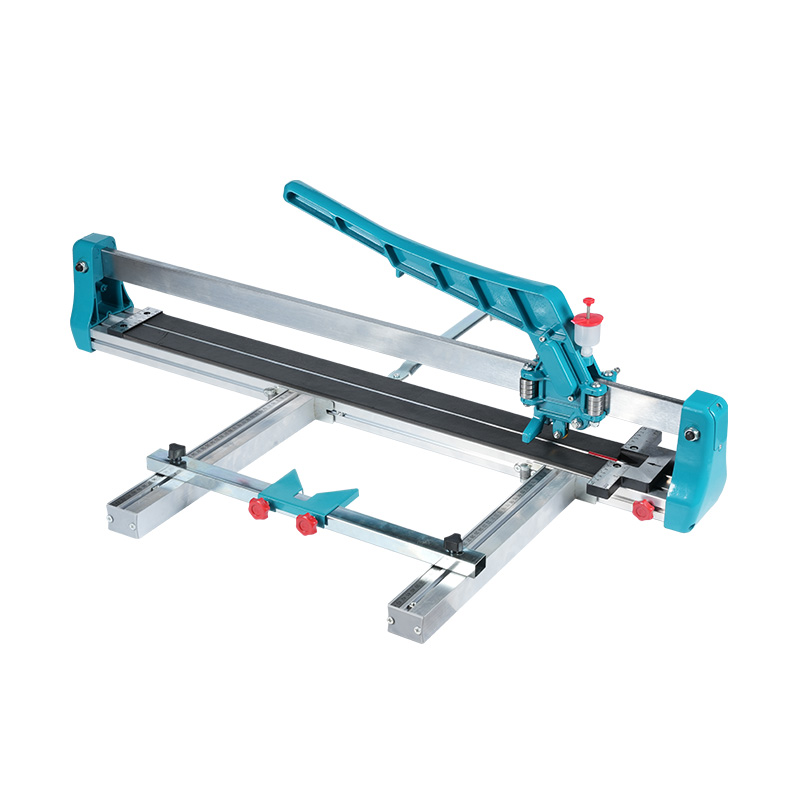
Diagonal tile layouts create a different cutting requirement from standard edge-to-edge cuts. A square tile installed at a 45-degree orientation may need to be cut across its diagonal, creating a considerably longer cutting path than a straight cut along one side. This raises an important question: are manual tile cutting tools suitable for diagonal work?
Modern manual cutters can handle many diagonal cuts, provided the tile dimensions, thickness, material, and cutter capacity are compatible. Dedicated angle guides and adjustable fences also make diagonal positioning more controlled. Professional models from manufacturers such as RUBI and Norton publish separate diagonal capacities rather than treating them as identical to straight-cut specifications.
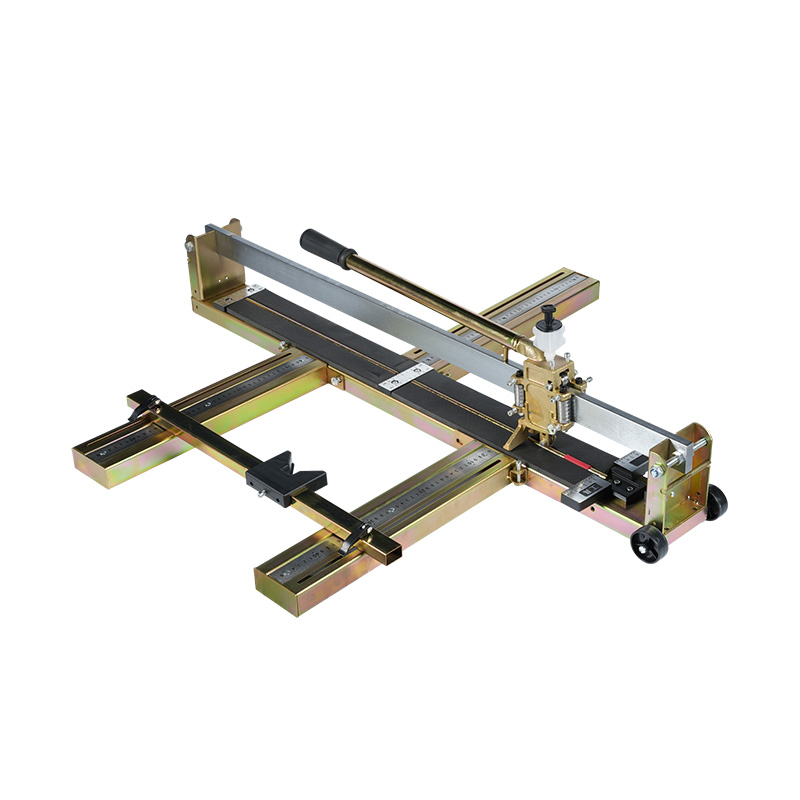
Cutting length can easily create confusion during tool selection. A cutter rated at 600 mm for straight cuts does not necessarily handle a 600 mm square tile diagonally.
A 600 × 600 mm square has a diagonal of approximately 849 mm. That means the cutter needs a diagonal capacity close to this dimension to cross the entire tile. Manufacturers therefore publish separate straight and diagonal figures.
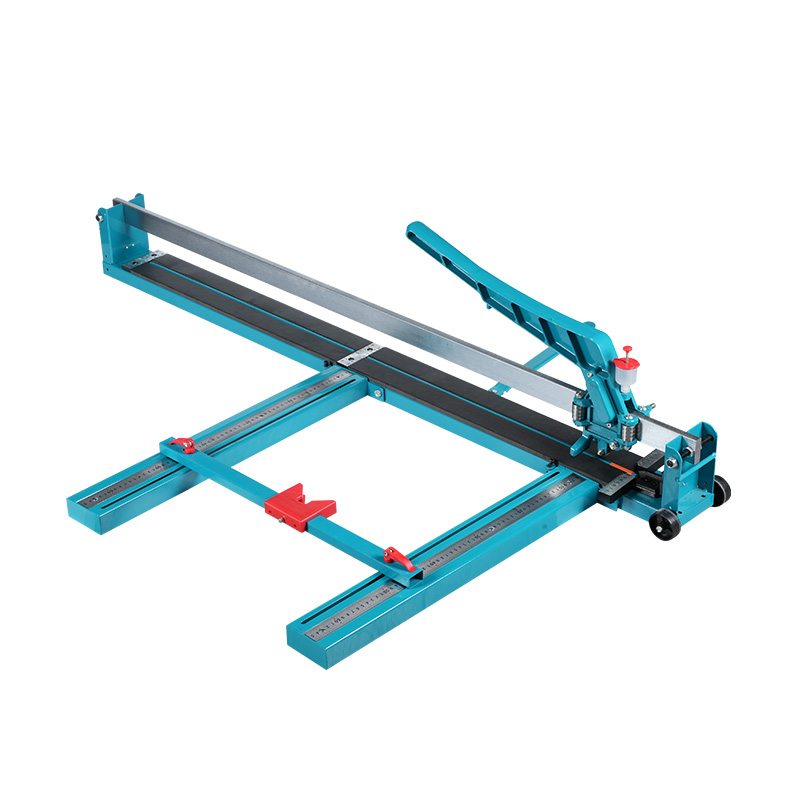
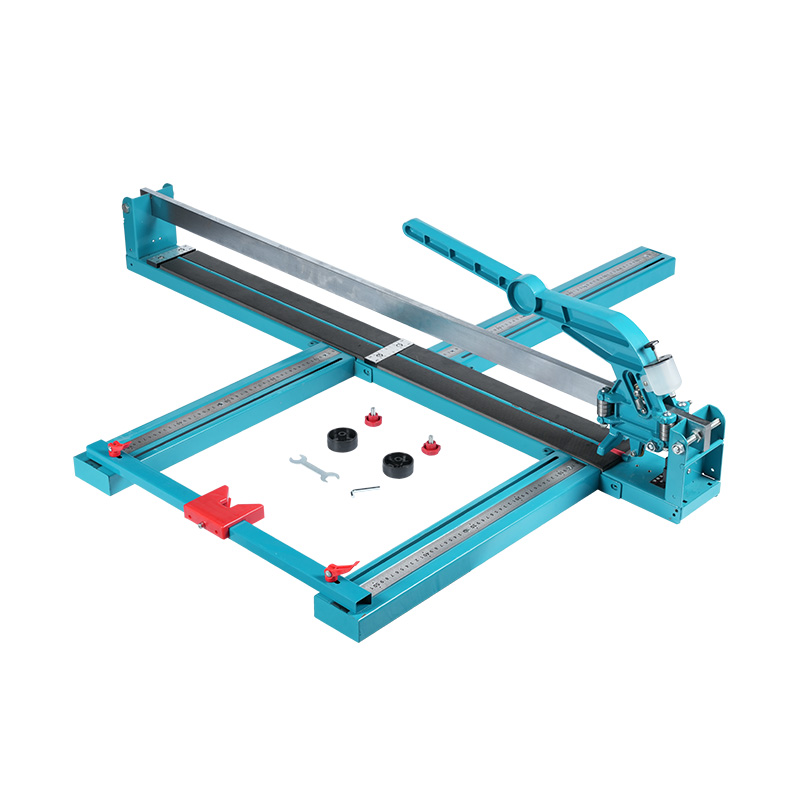
Diagonal cutting becomes easier to control with a dedicated angle guide. Rather than estimating the position by eye, the tile can be aligned against a fixed reference point before scoring.
Some manual tile cutting tools include adjustable diagonal fences that cover a range of angles. Battipav's Basic Plus series, for example, uses an adjustable diagonal fence from 45° to 90°. Its 600 mm model provides a maximum diagonal tile size of 420 × 420 mm and supports tile thicknesses from 4 to 12 mm.
Angle adjustment becomes particularly useful for repeated cuts because the same reference position can be reproduced across multiple tiles.
Scoring creates the fracture path, but the breaking mechanism completes the separation. Diagonal cuts can place pressure across a different section of the tile compared with a conventional straight cut, so the breaker needs to maintain stable contact near the score line.
Professional manual cutters may use multi-point breaking systems or adjustable breaker feet. RUBI's TZ-850, for example, is rated for ceramic and porcelain tiles from 1/8 to 13/16 inch thick and provides up to 3,307 lb of breaking force. Its published diagonal capacity is 24 × 24 inches against a 33.5-inch straight-cut capacity.
Such specifications illustrate why diagonal capacity and breaking force should be evaluated together rather than viewed as separate features.
Ceramic wall tile and dense porcelain do not behave identically under score-and-snap pressure. Hard porcelain generally demands a suitable scoring wheel and a rigid cutting structure.
Norton lists tungsten-carbide wheels on its CTM series and specifically describes them as suitable for porcelain tile and stoneware. The CTM 1200 supports material from 3 to 20 mm thick, although the manufacturer notes that materials above 15 mm can become difficult to cut manually because of their physical characteristics, internal stresses, and finish.
This distinction matters during diagonal cuts because a difficult material can magnify small alignment or scoring problems.
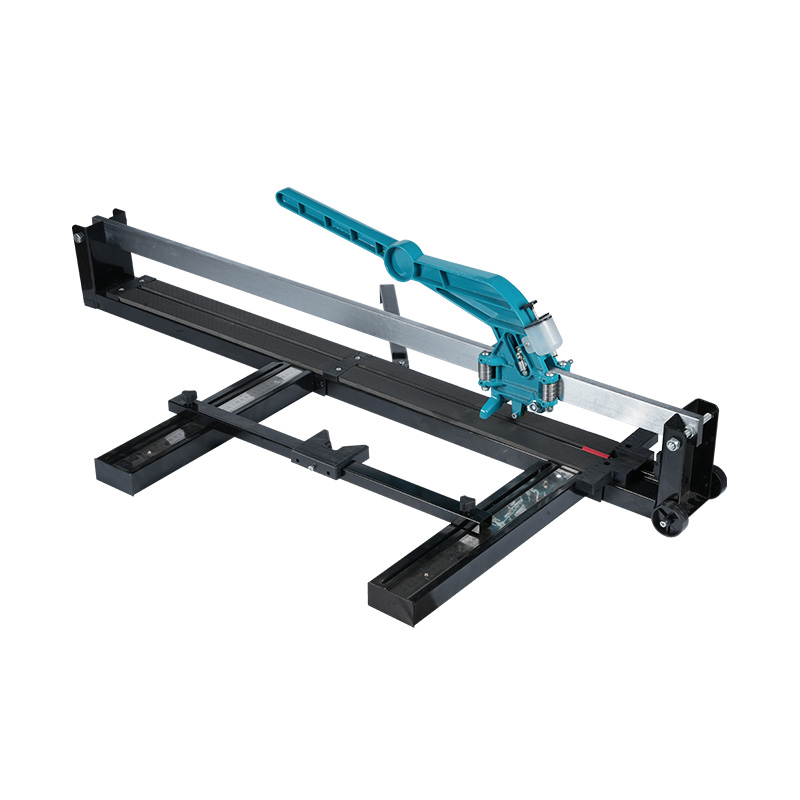
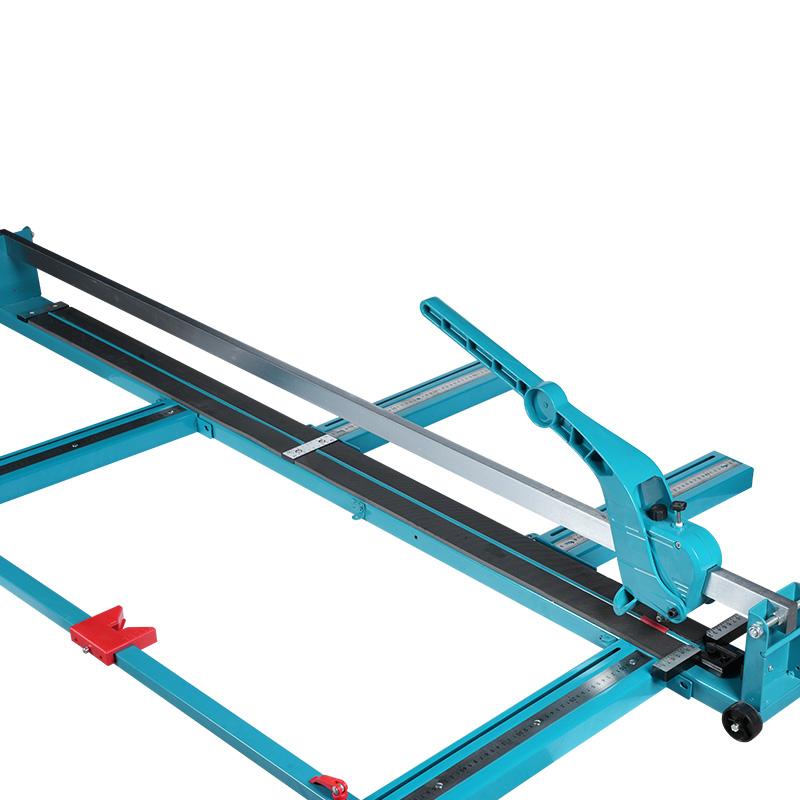
A diagonal cut requires the scoring carriage to travel smoothly across the tile while maintaining consistent contact. Rail movement or carriage play can interrupt the score line, making the final break less predictable.
QEP's larger manual models combine ball-bearing scoring heads, reinforced rails, replaceable tungsten-carbide wheels, and adjustable angle guides. Its 48-inch LFT model is rated for diagonal cuts up to 34-inch tiles and tile thicknesses up to 5/8 inch.
Diagonal score-and-snap cutting works well for compatible ceramic and some porcelain tiles, but it is not universal. Very thick porcelain, highly textured surfaces, narrow sections, unusual shapes, and materials with unpredictable internal stress can produce inconsistent breaks.
Guidance from Fine Homebuilding notes that manual cutters can make angled cuts on many tile types, while repeated shattering or poor snapping may indicate that an electric wet saw is more suitable.
Manual tile cutting tools can produce reliable diagonal cuts, but the advertised straight-cut length should never be used as the only purchasing reference. Diagonal capacity, angle guidance, rail rigidity, scoring-wheel design, breaking force, and tile thickness all influence the final result.
For standard ceramic and compatible porcelain applications, a well-designed manual cutter can provide a clean score-and-snap process without requiring powered equipment. More demanding materials or unusually large diagonal dimensions may call for a wet saw or another cutting method. The practical question is therefore not simply whether a manual cutter can make a diagonal cut, but whether its specifications match the exact tile and angle required.
Copyright © Yongkang Shuofang Import and Export Co., Ltd. All Rights Reserved.

Falans Tile Laying Tools Factory