English
 русский
 Español
 italiano
Home / News / Industry News / Why Are Tile Vibrating Pavers Becoming Popular in Construction Projects?



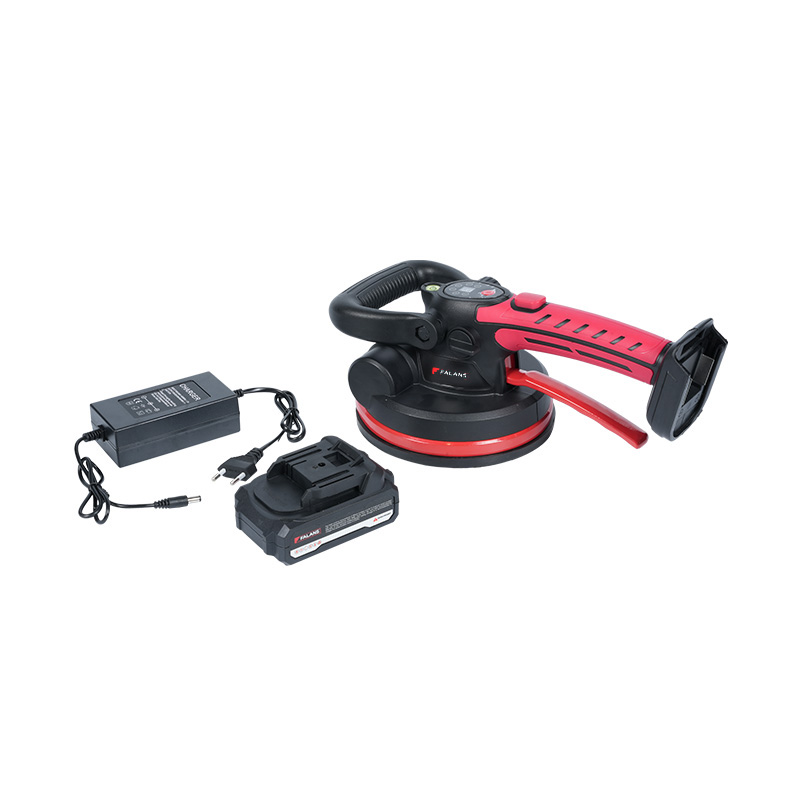
Constructing smooth, durable surfaces for sidewalks, patios, and public spaces has always been a demanding task. Achieving even alignment and stable compaction often requires skill, patience, and time. Enter the Tile Vibrating Paver, a tool designed to simplify installation while improving the final result. But how does it change the way paving projects are executed, and why are more construction teams adopting it?
A Tile Vibrating Paver combines mechanical vibration with controlled placement to settle tiles evenly. By applying consistent vibration, the paver ensures that each tile locks into place and the base material compacts uniformly. This reduces the likelihood of uneven surfaces, cracks, or loose tiles over time.
For workers, this means less manual adjustment and fewer corrections after installation. Consistency is particularly valuable in large projects where maintaining quality across hundreds or thousands of tiles can be challenging.
Traditional tile installation often requires manual tapping, leveling, and checking each tile individually. This process can be slow and physically demanding. Using a Tile Vibrating Paver accelerates these steps by integrating vibration and movement into a single operation.
The result is faster project completion without sacrificing quality. Teams can handle larger areas in shorter periods, freeing up time for additional finishing work or other tasks on the construction site.
A major advantage of using a Tile Vibrating Paver is improved compaction. Properly compacted tiles and base material resist shifting and settle evenly, which reduces long-term maintenance needs.
Additionally, vibration helps grout or sand fill gaps more effectively, creating a tighter bond between tiles. This contributes to a smoother walking surface and a visually appealing finish. For commercial areas with high foot traffic, this added stability is crucial for both safety and appearance.
Tile Vibrating Pavers are not limited to one type of tile or surface. They can be used for concrete pavers, stone tiles, or interlocking brick systems, making them versatile tools for urban landscaping, residential projects, and public works.
Different models may offer adjustable vibration intensity or size options to suit the scale and material of the project. This flexibility allows teams to adapt the paver to different job site conditions while maintaining consistent results.
Repetitive manual tile installation can lead to fatigue and strain for construction workers. By mechanizing the compaction process, the Tile Vibrating Paver reduces physical stress while improving precision. Workers spend less time bending, tapping, or adjusting individual tiles, which also lowers the risk of errors caused by fatigue.
This balance of efficiency and ergonomics contributes to both productivity and worker safety, which is a growing concern in construction projects.
While investing in a Tile Vibrating Paver involves initial cost, the savings in labor, reduced rework, and faster project timelines often offset the expenditure. In large-scale projects, these advantages can be significant, making the tool a practical investment for both contractors and urban planners.
The Tile Vibrating Paver is more than a convenience—it reshapes how paving projects are approached. By ensuring even compaction, improving stability, and reducing labor strain, it allows construction teams to deliver better results efficiently. As cities, parks, and residential areas demand faster, durable, and visually appealing paving solutions, the Tile Vibrating Paver proves to be a valuable addition to modern construction equipment.
Copyright © Yongkang Shuofang Import and Export Co., Ltd. All Rights Reserved.

Falans Tile Laying Tools Factory