English
 русский
 Español
 italiano
Home / News / Industry News / What Makes Tile Silicone Suction Cup Useful For Large Format Tile Positioning Work



On many job sites, large format tiles are no longer something handled casually by hand alone. Once the size increases, even small movements during lifting or placement start to matter. The way a tile is picked up, carried, and set down begins to affect the final alignment more than people expect.
That is usually where tools like Tile Silicone Suction Cup come into the picture. It is not a complicated device, but it changes how the tile is controlled during movement. In some projects, Tile Vacuum Suction Cup is used in similar steps, especially when a stronger holding force is needed, but both tools tend to appear in the same working flow rather than replacing each other.
In many material handling and installation systems, including those associated with Yongkang Shuofang Import and Export Co., Ltd. , these tools are treated as everyday support items rather than special equipment. Their value shows up only when tiles become larger and less forgiving to handle.
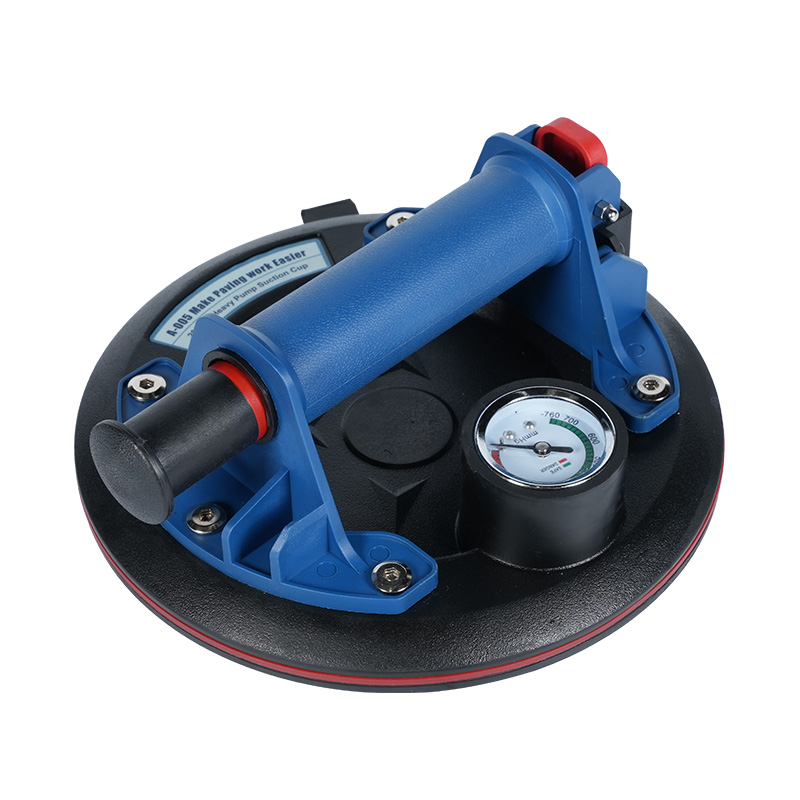
When tiles are small, workers can usually adjust them directly with hands without much concern. Once the format becomes larger, the situation changes in a very practical way. The surface becomes harder to control, and the weight is spread differently.
On site, this usually leads to a few common situations:
Because of this, handling starts to shift from direct contact to assisted movement. Suction based tools are not used for decoration or convenience, but because they make positioning more predictable during those short but critical moments before the tile is fixed.
Tile Silicone Suction Cup and Tile Vacuum Suction Cup often appear in the same toolbox, just used at different points depending on the task.
Tile Silicone Suction Cup is a simple idea in structure. It uses a flexible silicone surface to attach directly to the tile face so the worker can lift and move the piece without gripping the edges.
In real work conditions, it is mostly used for:
What matters here is not force but contact. The silicone surface adapts slightly to the tile finish, which helps keep contact stable while the tile is moving.
It is usually not treated as a "lifting machine," but more like an extension of the hand that spreads contact pressure more evenly.
When the suction cup is pressed onto the tile, the contact area spreads across a wider surface instead of concentrating pressure on one point. That simple change affects how the tile behaves while being moved.
In practice, people often notice:
It is not about making the job faster in an aggressive way. It is more about reducing sudden movement so the tile does not shift unexpectedly during transfer.
This becomes more noticeable when working with larger pieces that are awkward to hold by hand alone.
In real installation work, not every tile surface behaves the same. Some are smooth, others have light texture, and some carry fine dust from cutting or storage.
These surface differences affect suction behavior in a very direct way:
Workers often adjust pressure and placement slightly based on how the first contact feels. It is not something measured precisely on site, more something that is felt during handling.
Tile Vacuum Suction Cup tends to rely more on surface cleanliness, while silicone-based suction is usually more forgiving, especially in mixed working conditions.
Tile Vacuum Suction Cup works on a different principle. Instead of relying mainly on silicone contact behavior, it creates a vacuum effect that holds the tile more firmly once sealed.
In practice, it is often used when:
Compared with silicone suction, it feels less "adaptive" but more "locked in" once attached. That difference becomes clear during movement rather than in static holding.
Even though both tools serve the same general purpose of helping move tiles, their behavior on site is not identical.
| Aspect | Tile Silicone Suction Cup | Tile Vacuum Suction Cup |
|---|---|---|
| Grip style | Flexible surface contact | Vacuum sealing grip |
| Movement feel | Easier adjustment during carry | More fixed during lifting |
| Surface sensitivity | More tolerant of minor dust | More dependent on clean surface |
| Handling role | Positioning and adjustment | Lifting and stable transport |
| Control style | Gradual and adjustable | Firm and steady |
In many real projects, both are used together rather than separately, depending on the stage of installation.
Once a tile is lifted and moved into position, the final placement still needs adjustment. This is where suction tools quietly help reduce unnecessary movement.
In actual working behavior:
The key point is control. Instead of pushing or dragging tiles directly, the tool allows movement in a more stable way.
Conditions on site are rarely stable for long periods. Temperature, dust, and airflow all change how tools feel during use.
Some common influences include:
Because of this, workers often rely on immediate feedback from the tool rather than fixed assumptions. If grip feels slightly different, handling is adjusted on the spot.
Not all tiles behave the same during lifting. Thickness and weight distribution change how suction tools perform.
In real use:
These factors are usually noticed during lifting rather than before, which is why experience plays a role in how tools are used.
One of the less visible effects of using Tile Silicone Suction Cup is how it changes the physical feeling of handling tiles repeatedly.
In daily work:
It does not remove effort, but it spreads it in a more manageable way during repeated tasks.
Tile installation is not a single action but a sequence. Suction tools usually appear in more than one step.
Typical flow:
Each step may use the same tool differently, depending on how much control is needed at that moment.
Even with tools, the final result still depends on how installation is carried out.
On site, small habits matter:
Tools support the process, but they do not replace attention during placement.
Suction tools stay in repeated contact with different surfaces, so basic maintenance is part of normal use.
Common habits include:
These small steps help keep performance consistent over time.
In smaller projects, silicone suction tools are often enough for handling and positioning. In larger scale work, vacuum based tools appear more frequently because of heavier loads and longer movement distances.
They are not competing tools, more like different options used depending on what the project requires at each stage.
Final performance always depends on real conditions:
These elements together decide how smooth the handling process feels on site.
In real installation work, Tile Silicone Suction Cup and Tile Vacuum Suction Cup are part of a practical handling system rather than standalone solutions. Their role becomes clear when tile size increases and positioning needs more control than direct hand movement can comfortably provide.
They do not change the installation process completely, but they quietly make movement and placement more manageable in everyday working conditions.
Copyright © Yongkang Shuofang Import and Export Co., Ltd. All Rights Reserved.

Falans Tile Laying Tools Factory